Country-Fried Cube Steak with Creamy Gravy, Mashed Potatoes and Green Beans
August 29, 2026
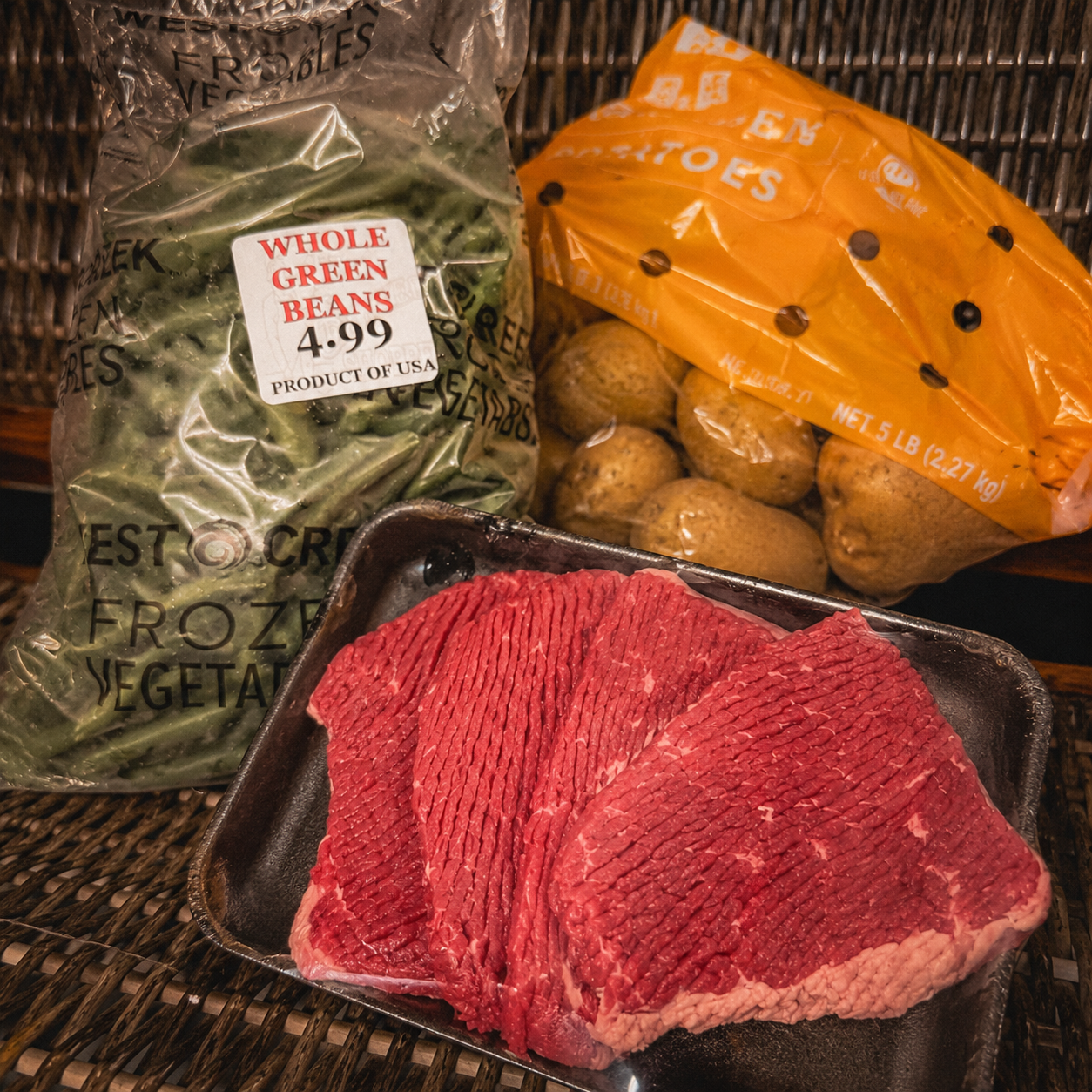
If Monday is going to Monday, at least dinner can taste like somebody’s grandmother made it.
This is the plate a lot of us grew up on and almost nobody makes anymore, which is a shame, because it’s about thirty minutes of work and most of that is potatoes boiling. Cube steaks get dredged and fried until the coating goes golden and crackly. The gravy gets built in the same skillet out of the drippings. No extra pan, no packet.
Cube steak is one of the best values in the entire meat case, and this is the dish it was invented for.
What a Cube Steak Actually Is
Cube steak isn’t a cut of the cow. It’s a cut that’s been processed (usually top round or another lean cut from the hindquarter, run through a tenderizer that presses those little square indentations into both sides).
Those marks aren’t decoration. The machine is cutting through the connective tissue and muscle fiber that would otherwise make round steak tough enough to argue with. It’s mechanical tenderizing, and it converts a cheap, hardworking cut into something you can fry in six minutes and still cut with a fork.
That’s why cube steak has one correct cooking method and one incorrect one. Fast and hot works. The tenderizing already happened; all the heat has to do is cook it. Slow and low is a mistake: a lean, tenderized steak sitting in a pan for twenty minutes just dries out. Get your oil hot, fry it fast, get it out.
Ours is cut and tenderized in the shop, which means we know what went into it. And it’s in the $59.99 Butcher Special.
Beef is safe at 145°F, but a quarter-inch cube steak passes that on the way to golden, so cook these by color, not by thermometer.
The Dredge Is the Whole Recipe
Everything people don’t like about homemade country-fried steak comes down to breading that fell off in the pan. Three things prevent that:
Flour, egg, flour. In that order, and press. The first flour layer gives the egg something to grab. The egg glues. The second flour layer is what browns. Press the steak firmly into the flour both times instead of dusting it.
Let the dredged steaks sit for ten minutes before they hit the oil. This is the step everybody skips, and it’s the one that matters most. The coating hydrates and sets onto the meat. Straight from the dredge to the pan and it slides off.
Get the oil hot enough, and don’t crowd the skillet. You want a steady sizzle the moment the steak goes in (around 350°F). Too cool and the coating soaks up grease instead of crisping. Too many steaks at once drops the temperature and does the same thing. Two at a time, and let the oil come back up in between.
On the gravy: leave about two tablespoons of drippings, whisk in the flour, and cook it for a full minute before any milk goes in. That minute cooks the raw taste out of the flour. Then add the milk slowly and keep whisking. And be generous with the black pepper. A proper milk gravy should be visibly speckled.
Country-Fried Cube Steak with Creamy Gravy, Mashed Potatoes and Green Beans
Prep time: 15 minutes
Cook time: 30 minutes
Serves: 4 to 5
You’ll Need
- 5 Lil Butcher Shoppe 4 oz. Cube Steaks
- 1¼ cups all-purpose flour
- 2 eggs
- 2 cups milk, plus a splash for the potatoes
- 2 lbs. russet or Yukon Gold potatoes
- 1 bag frozen green beans
- 5 tablespoons butter, divided
- Vegetable oil for frying
- 1 teaspoon garlic powder
- 1 teaspoon paprika
- ½ teaspoon onion powder
- Salt and black pepper
Let’s Cook
- Peel and chop the potatoes. Place them in a pot of salted water and boil until fork-tender.
- While the potatoes cook, place 1 cup of flour in a shallow dish and season with garlic powder, paprika, onion powder, salt and black pepper.
- In a second dish, whisk the eggs with ½ cup of milk.
- Dip each cube steak into the flour, then the egg mixture, then back into the flour, pressing firmly each time. Let the dredged steaks rest for about ten minutes.
- Heat a thin layer of vegetable oil in a large skillet over medium heat. Fry the steaks until golden brown and cooked through, working in batches if needed. Remove and keep warm.
- Carefully drain most of the oil, leaving about 2 tablespoons of drippings in the skillet. Whisk in the remaining ¼ cup flour. Cook for about one minute, then slowly whisk in 1½ cups milk. Season with salt and plenty of black pepper and simmer until thickened.
- Drain the potatoes and mash with 3 tablespoons butter, a splash of milk, salt and pepper.
- Cook the frozen green beans according to the package directions and finish with the remaining butter.
- Pile it all onto a plate and spoon that creamy gravy right over the cube steak.
What’s in the $59.99 Butcher Special
These cube steaks are one of eight items in this week’s special, and every one of them becomes a dinner in this meal plan:
- 5 — 4 oz. Cube Steaks
- 5 — 4 oz. Chop Steaks
- 1 — 2½ lb. Beef Roast
- 1½ lbs. Ground Beef
- 5 — 4 oz. Pork Chops
- 1 package Chicken Leg Quarters
- 12 oz. Bacon
- 1 package Smoked Sausage
That’s seven completely different suppers out of one box.
Tips from Behind the Counter
Season the flour, not the steak. With a dredge this heavy, seasoning on the meat ends up underneath the coating where you can’t taste it. Put it in the flour.
Keep the fried steaks on a wire rack, not a plate. A plate traps steam under the steak and softens the bottom coating you just worked for. A rack keeps all four sides crisp. A low oven, around 200°F, holds them while you finish the gravy.
Don’t drain the skillet all the way. Those browned bits stuck to the bottom are the gravy’s entire flavor. Scrape them up as you whisk.
If the gravy gets too thick, add more milk. If it’s too thin, let it simmer another minute. It’s very hard to actually ruin.
Warm the milk for the mashed potatoes. Cold milk cools the potatoes down and makes them harder to mash smooth, which is how mashed potatoes end up overworked and gluey.
Ways to Change It Up
- Make it smothered instead of fried. Brown the steaks, then simmer them in onion gravy for twenty minutes. That’s a different, equally good dinner.
- Add a splash of hot sauce to the egg wash. It won’t make it spicy; it makes it taste like more.
- Swap the milk gravy for onion gravy if you’d rather have brown than white.
- Serve it over rice instead of alongside mashed potatoes.
- Save one steak for breakfast. Cube steak, a fried egg and a biscuit is a genuinely excellent way to start a day.
One Stop for Monday Dinner in Hattiesburg
The cube steaks, the potatoes, the green beans, the flour and the milk: all are one trip. Our shop at 1910 Broadway Drive is a butcher counter and a grocery, so the whole plate comes out of one building.
We’ve been family owned and operated in Hattiesburg since 1991. Along with the fresh meat counter, the case is full of homemade cooking that’s already done for you: stuffed potatoes, boudin, gumbo, meatloaf, chicken pot pies, crawfish pies and stuffed bell peppers.
Want the specials before everybody else? Text Butcher to 601-281-6633 to join our VIP text program.
Hours: Monday–Tuesday and Thursday–Saturday, 9:30 a.m. to 5:30 p.m. Closed Wednesday and Sunday.
Phone: 601-261-2765
Address: 1910 Broadway Drive, Hattiesburg, MS 39401 — get directions or reach out
Outside the area? Our smoked sausage ships nationwide, and you can find us on the shelf at stores across Mississippi and the Gulf South.