Pork Steak with Onion Gravy and Seasoned Rice
September 12, 2026
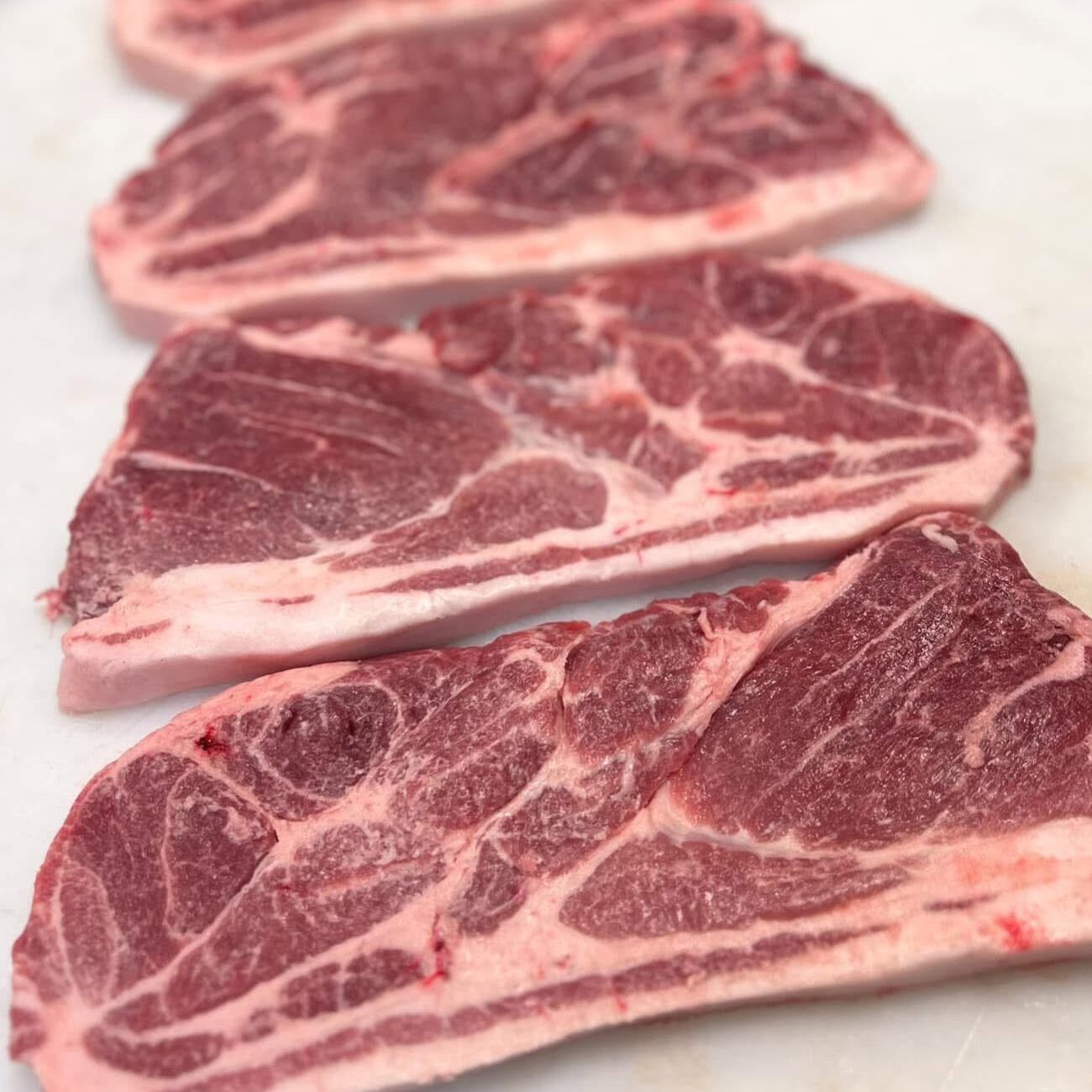
The gravy makes an inexpensive cut feel a whole lot more substantial.
There is one number missing from this recipe, and it is the number that appears in every other pork recipe we publish. Step nine does not say 145°F. It says “until the pork is tender.”
That is not an oversight. It is the whole difference between a pork steak and a pork chop, and it is the thing most people never get told.
A Pork Steak Is Shoulder, and 145°F Will Make It Tough
A pork chop comes off the loin: the long, lean muscle down the back that does almost no work. A pork steak comes off the other end entirely. It is the Boston butt, the shoulder, sliced across into steaks instead of left whole. Same primal that pulled pork comes from. Often the same muscle, sometimes with a slice of the blade bone still in it.
Shoulder is a working muscle, which means it is loaded with collagen — the connective tissue that holds muscle fibers together. Collagen does not care about 145°F. At 145°F it is still tight, and a pork steak pulled there is safe to eat and unpleasant to chew. It needs to get up around 180 to 195°F and stay there long enough to melt into gelatin, and when it does, the meat goes from tough to falling apart.
You cannot rush that with heat, only with time. Which is why the recipe browns the steaks hard for three or four minutes a side and then puts a lid on and drops the heat for twenty-five minutes. The browning is flavor. The covered simmer is the actual cooking.
So put the thermometer away for this one. The doneness test here is a fork. If it slides in with no resistance, it is done, and if it fights you, give it another ten minutes. Five more minutes never hurt a pork steak. Five minutes has ruined plenty of pork chops.
Onion Gravy Is an Onion Recipe with a Gravy Packet In It
The packet supplies three things: salt, thickener and brown color. It does not supply flavor, and it will not rescue a pan you rushed.
The flavor is the onion, and the only variable you control is how far you take it. Five minutes, per step five, gets you softened onion, fine, and the recipe works. Ten to twelve minutes gets you onion that has actually started to go sweet and brown at the edges, and that is a different gravy. If you have the time, take it. Nothing else in this dish rewards five extra minutes as much.
Two things make that work. Slice the onion pole to pole, root to tip, rather than in rings across the middle. Onions cut that way hold their shape through twenty-five minutes of simmering instead of collapsing into threads, and you end up with onion in the gravy rather than gravy that used to have an onion in it.
And do not clean the skillet between step four and step five. The browned bits stuck to the bottom after searing the steaks are the only concentrated flavor in this recipe, and onions release enough water as they cook to lift every one of them. Wipe that pan out and you have made packet gravy.
Pork Steak with Onion Gravy and Seasoned Rice
Prep Time: 10 minutes
Cook Time: 35–40 minutes
Serves: 4
You’ll Need
- 4 pork steaks
- 1 onion, sliced
- 1 packet brown gravy mix
- 1½ cups water
- 2 cups uncooked rice
- Garlic powder
- Onion powder
- Salt
- Pepper
- Oil
Let’s Cook
- Prepare the rice according to package directions.
- Season the pork steaks with salt, pepper, garlic powder and onion powder.
- Heat a tablespoon of oil in a large skillet over medium-high heat.
- Brown the pork steaks for 3–4 minutes per side, then remove them from the skillet.
- Add the sliced onion and cook for about 5 minutes, until softened.
- Whisk the gravy mix with 1½ cups water and pour it into the skillet.
- Bring the gravy to a simmer.
- Return the pork steaks to the skillet.
- Cover, reduce heat to low and simmer for 20–25 minutes, or until the pork is tender and cooked through.
- Season the cooked rice lightly with salt, pepper and garlic powder.
- Serve the pork steaks and onion gravy over the rice.
The gravy makes an inexpensive cut feel a whole lot more substantial.
The Rest of the Pork Case
Pork steaks are cut from whole fresh local pork shoulders in house. Ask for them about three-quarters of an inch thick for this — thin ones cook through before the collagen has time to do anything, which is the one way to get a tough pork steak at the right internal temperature.
If you want the loin side of the pig instead, that is stuffed pork chops and hand-cut chops, and it is a completely different cooking method. Same animal, opposite rules.
The rest of the meat counter is open Friday until 5:30.
Tips from Behind the Counter
- Do not skip the sear to save time. It is the only browning in the dish, and the gravy is built directly on top of it.
- Slice the onion pole to pole. Rings dissolve. Pole-to-pole slices are still onion at the end.
- The gravy will look thin at step seven. It is supposed to. Twenty-five minutes covered plus juice from the pork brings it where it needs to be.
- Fork tender is the doneness test, not a number. For food safety the USDA safe minimum temperature chart puts whole pork at 145°F, but this cut eats right around 180–195°F, well past that floor.
- If it is tough, it is not done. Tough pork steak means undercooked, not overcooked. Lid back on, ten more minutes.
Ways to Change It Up
- Use beef broth in place of the water for a heavier gravy.
- Add sliced mushrooms with the onions at step five.
- Swap the rice for mashed potatoes; pork steak gravy was made for it.
- Move the whole thing to a slow cooker after the sear: four hours on low, same result, less watching.
- Add a splash of Worcestershire and a bay leaf to the gravy for something closer to a Sunday braise.
One Stop for Friday Dinner in Hattiesburg
Family owned and operated in Hattiesburg since 1991. Hours: Monday–Tuesday and Thursday–Saturday, 9:30 a.m. to 5:30 p.m. Closed Wednesday and Sunday. Phone: 601-261-2765. Address: 1910 Broadway Drive, Hattiesburg, MS 39401. Smoked sausage ships nationwide; also on shelves across Mississippi and the Gulf South.
Want the specials before everyone else does? Text Butcher to 601-281-6633 for the VIP list.